Ideas
Two-Tone Kitchen Cabinets: 6 Combinations That Work
6 two-tone kitchen cabinet combinations on a real kitchen, plus the rules: which color goes where, which hardware to use, costs, and common mistakes.
By the AI Kitchen Design editorial team · Updated November 10, 2026 · 3 min read
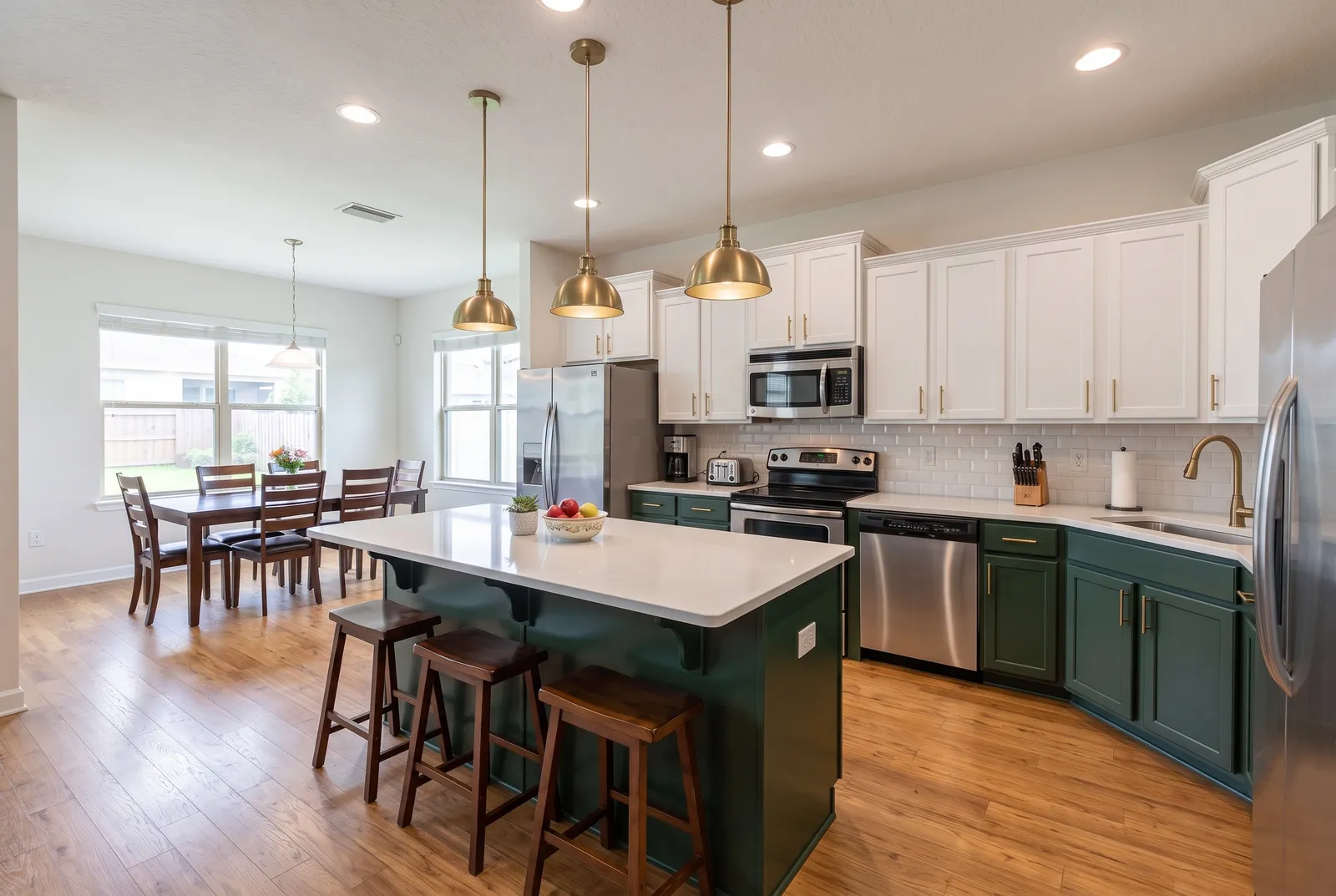
Two-tone cabinets let you use a bold color without it taking over the room. Done well, they add depth, highlight an island, and make a kitchen feel designed rather than default. Here are six combinations that work, each shown on a redesigned kitchen, and the rules that make them work.
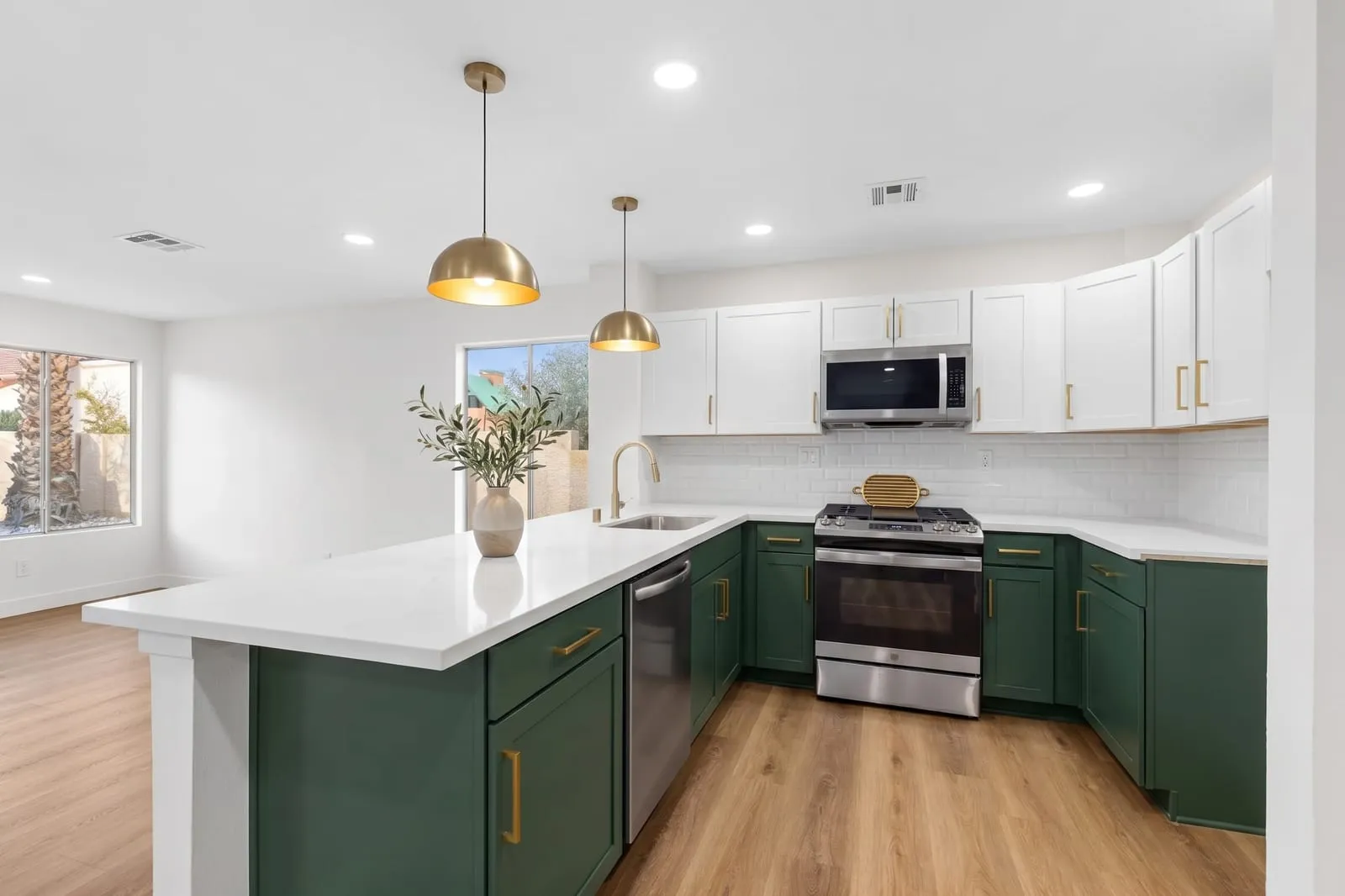
1. Forest green and white
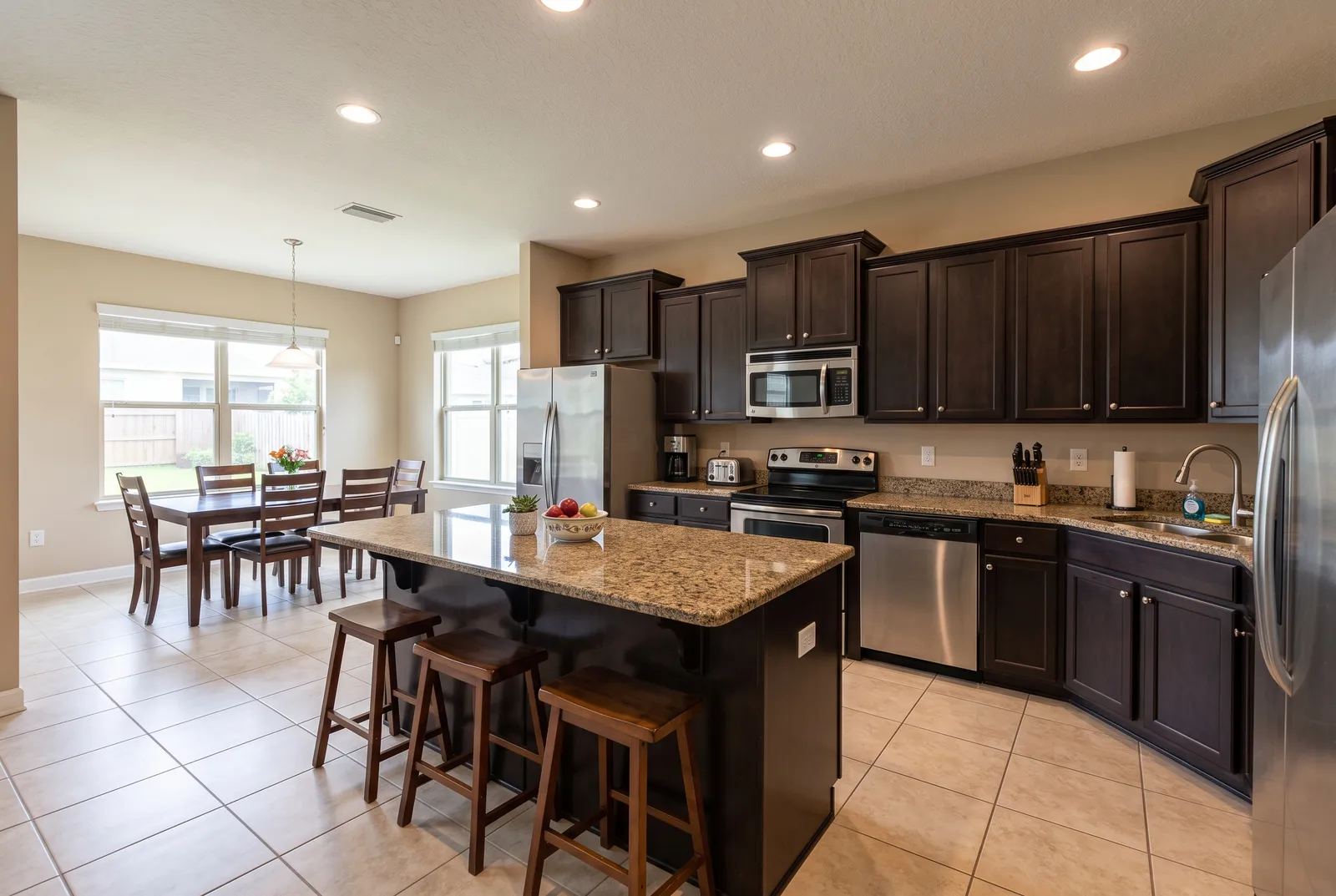
Rich, classic, and beautiful with brass. Green lowers read sophisticated without the weight of an all-green kitchen. Two-tone ideas.
2. Charcoal and white
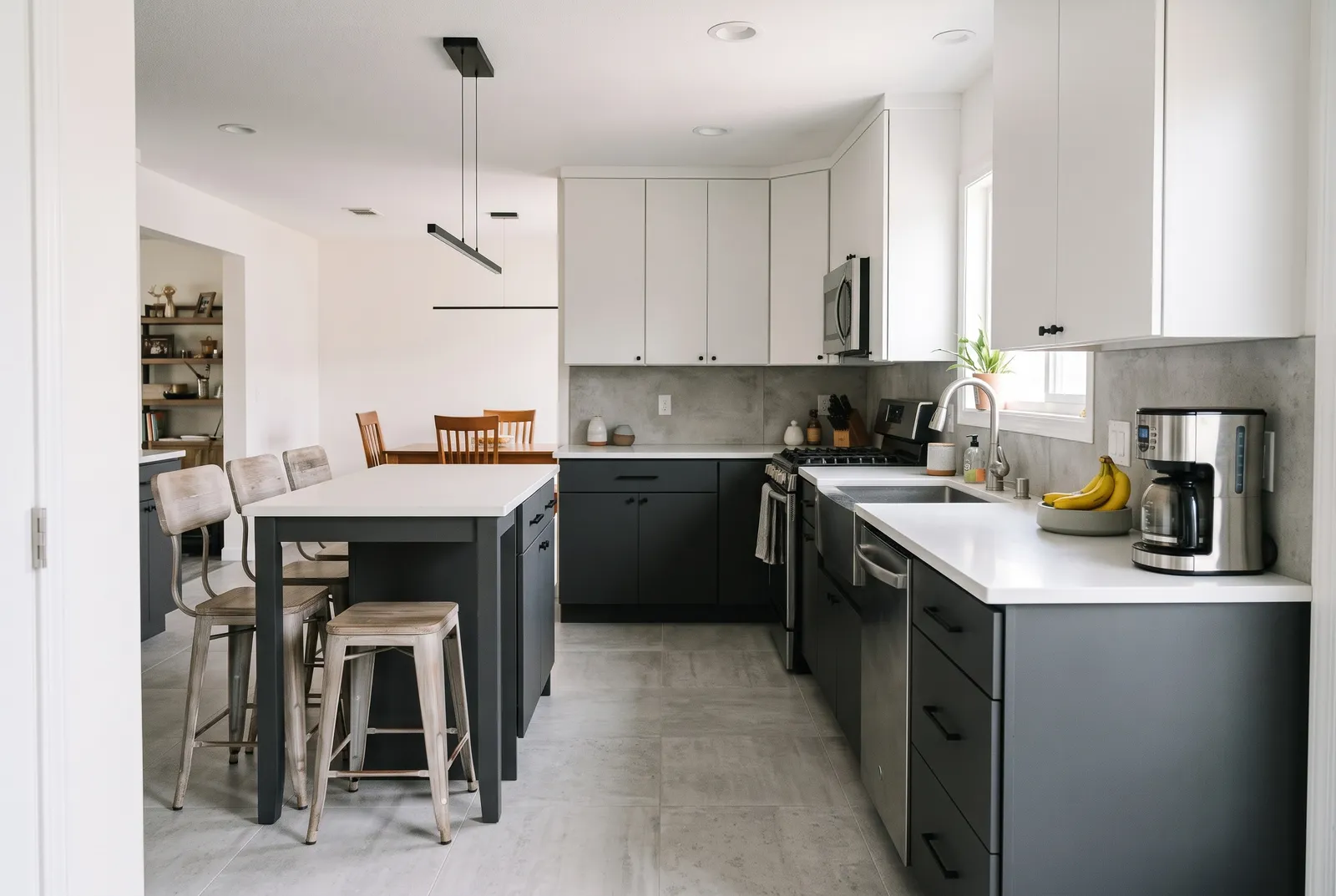
Crisp and modern, especially with slab doors and black hardware. A concrete-look backsplash bridges the two. Modern kitchens.
3. Walnut and greige
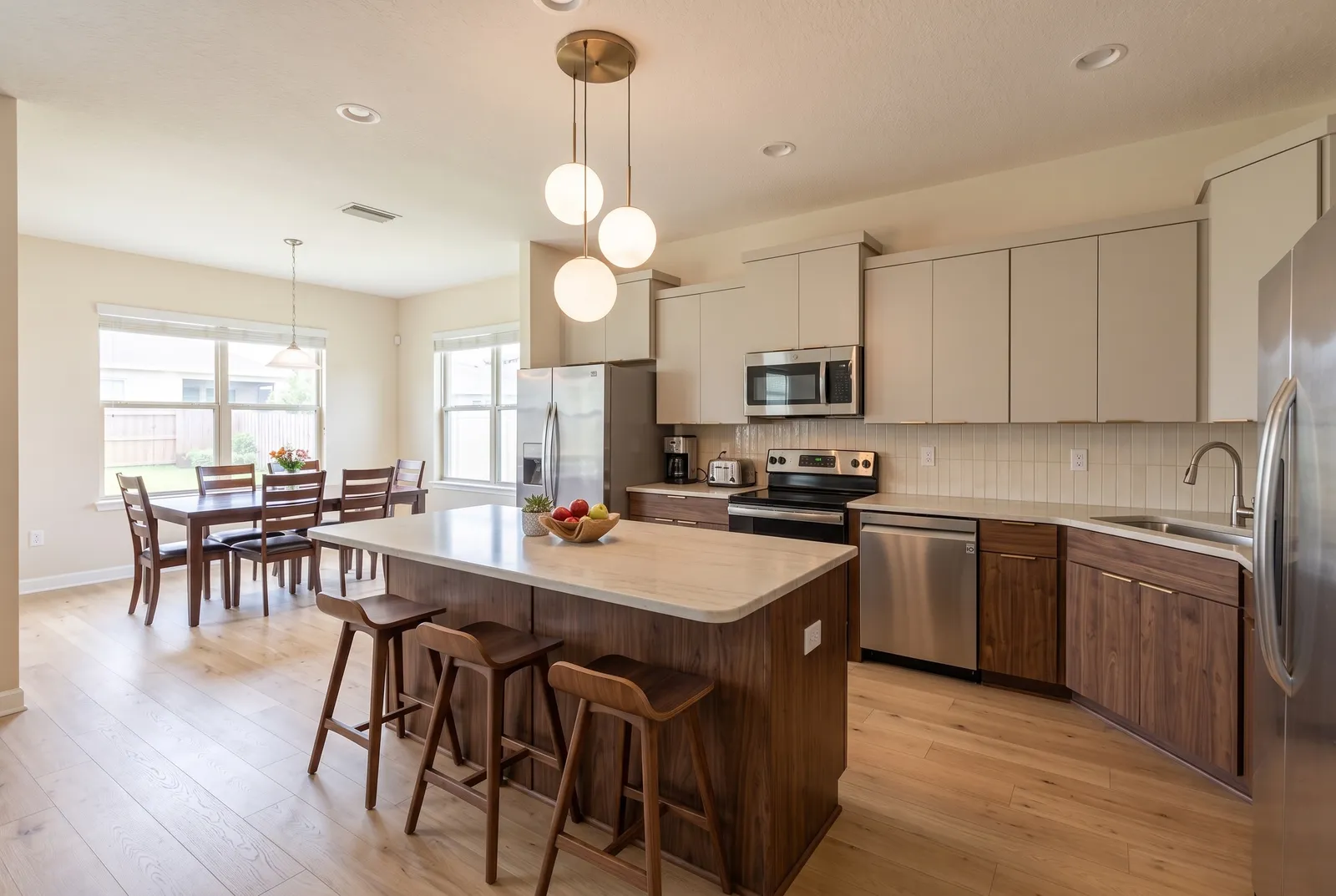
Warm wood below and soft paint above is the defining look of today's contemporary kitchens. Contemporary kitchens.
4. Sea blue and white
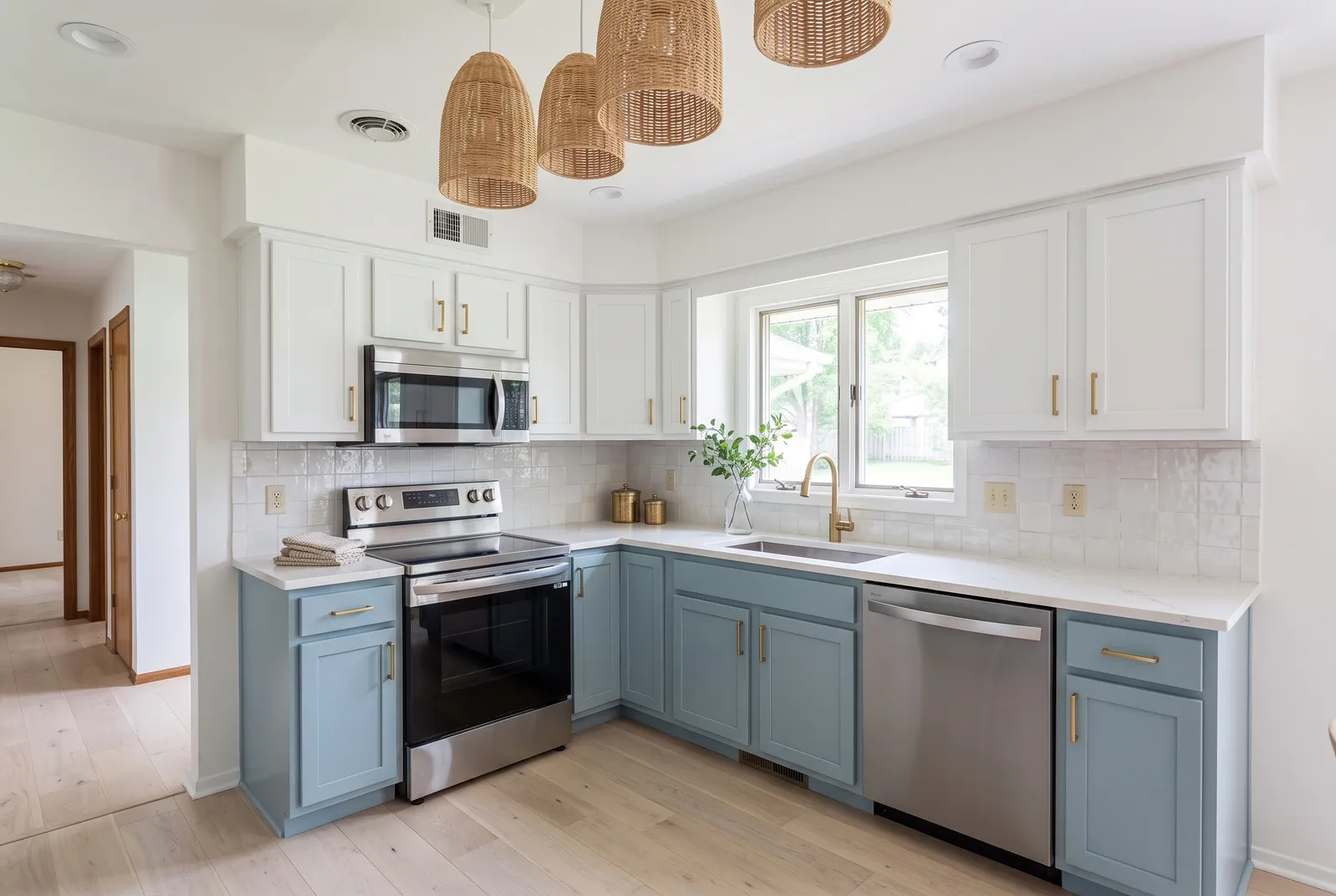
Light and breezy for coastal homes and bright kitchens. Rattan pendants complete it. Coastal kitchens.
5. Black and white
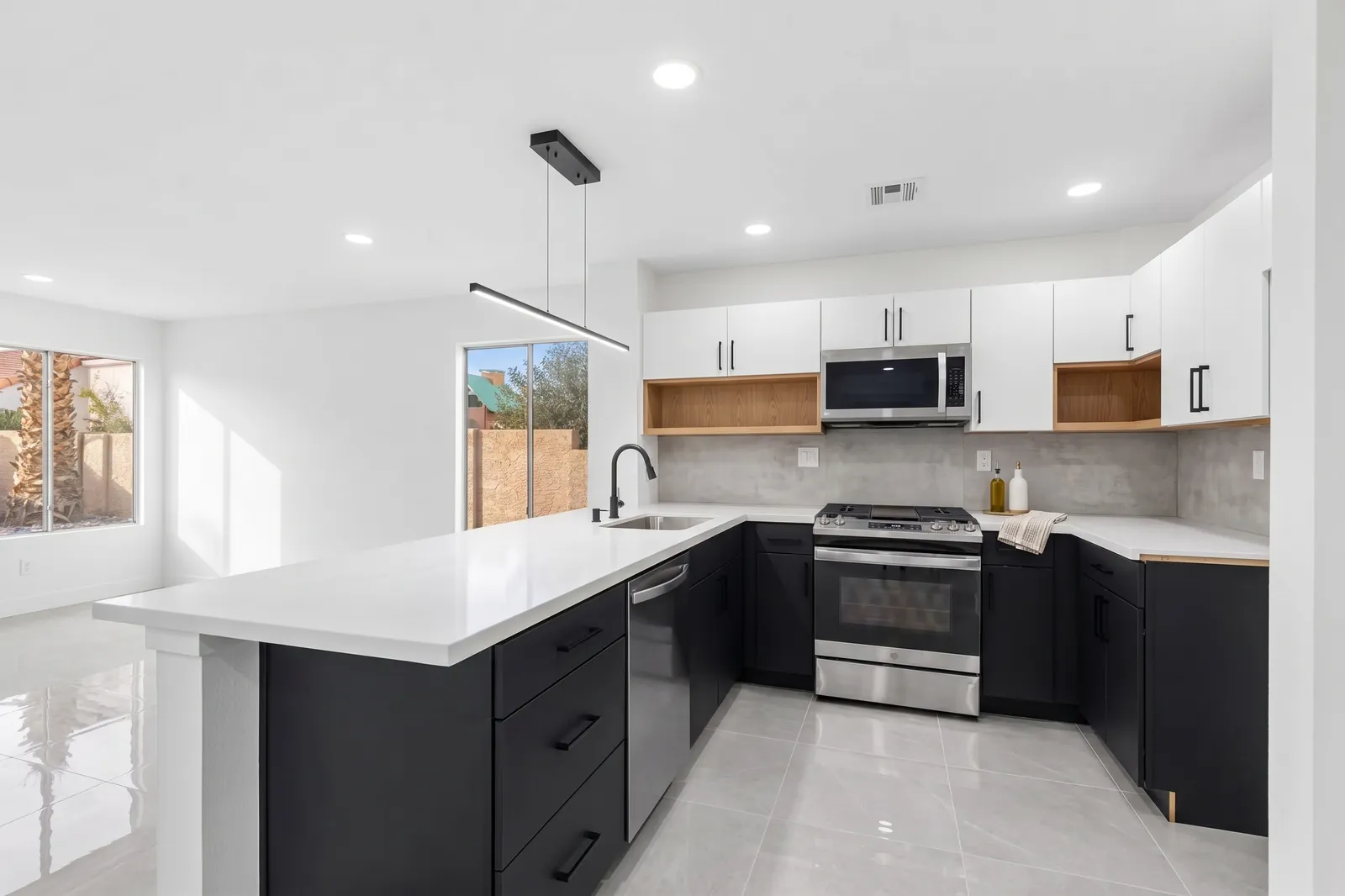
Maximum contrast. A warm wood shelf or floor stops it from feeling stark. Black kitchens.
6. White oak and white
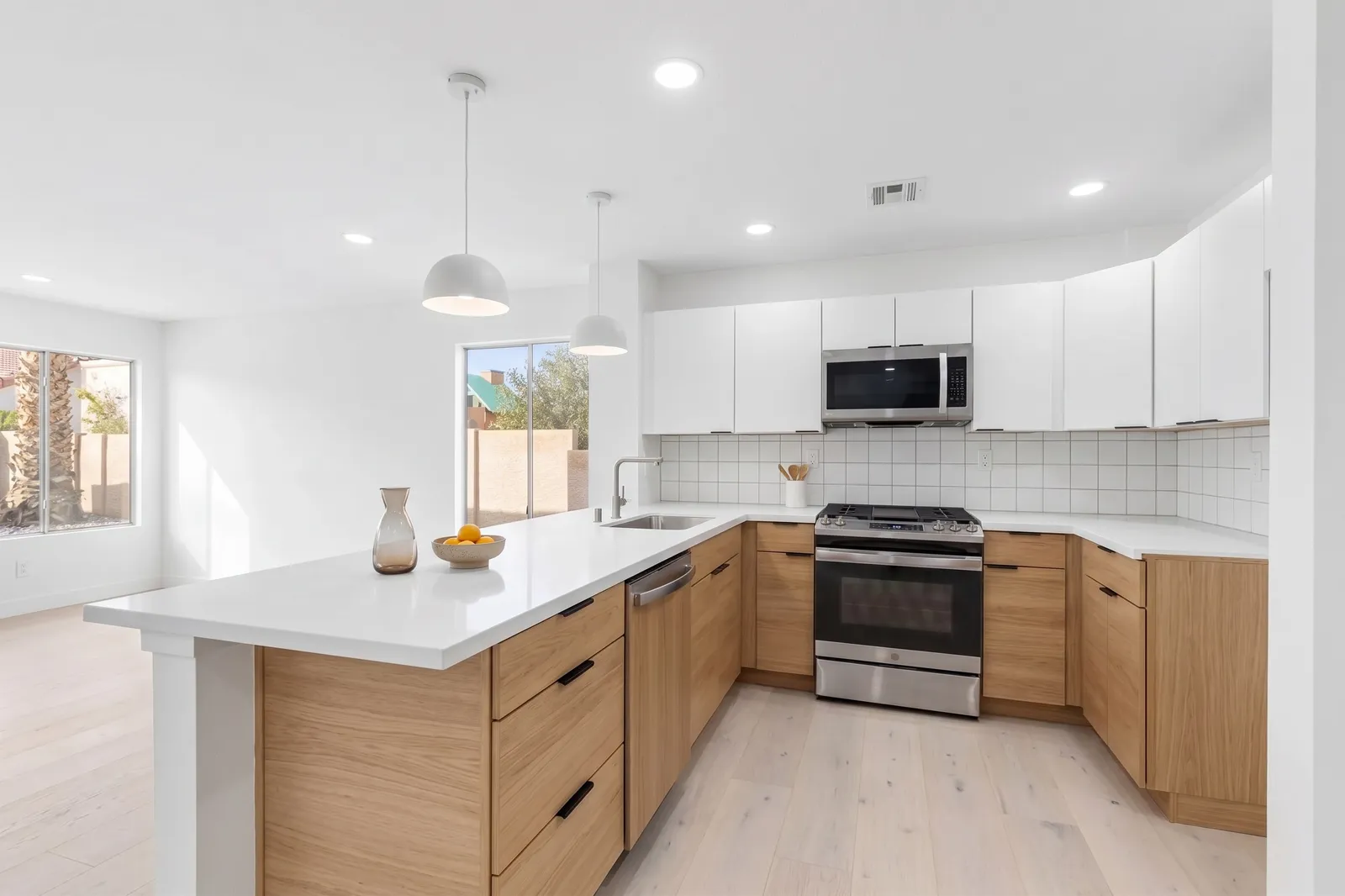
The softest combination: natural, bright, and easy to live with. White oak kitchens.
The rules for two-tone that works
- Dark below, light above. It's how rooms are naturally lit and it keeps ceilings feeling high.
- One hardware finish across both colors ties the scheme together.
- Neutral backsplash. Let the cabinets carry the color.
- Repeat each color once elsewhere, like a dark island and a matching stool, or wood shelves that echo wood lowers.
- Mind the floor. It's effectively a third tone; make sure it contrasts with the lower cabinets.
Island-only two-tone
If two colors on the walls feels like a lot, keep the perimeter one color and paint only the island. It's the lowest-risk way to try a bold color, and it's easy to change later.
Free toolKitchen color palette generatorCabinet, counter, hardware, wall, and floor combinations that work.Popular combinations at a glance
| Lowers / island | Uppers | Hardware | Feels |
|---|---|---|---|
| Navy | White | Brass | Classic |
| Forest green | White | Brass | Rich |
| Charcoal | White | Matte black | Modern |
| Walnut | Greige | Brass | Warm contemporary |
| White oak | White | Matte black | Scandinavian |
| Sage green | Cream | Brushed brass | Soft farmhouse |
How to choose your two colors
- Pick the anchor first. Choose the bolder color (usually the lowers or island), then a light partner that shares its undertone: warm whites with warm greens and navies, crisp whites with charcoal.
- Aim for clear contrast. Two mid-tones side by side look like a mistake; one dark and one light looks intentional.
- Count the floor. Dark lowers on a dark floor disappear. If the floor is dark, choose a mid-tone or wood for the lowers.
- Test both in your light on large samples, or on a photo of your kitchen.
Two-tone with wood
Wood counts as a color. Walnut or white oak on the lowers or island with painted uppers is warmer and more forgiving than two paint colors, and it ages better: scuffs on wood read as character, not damage.
What two-tone costs
As a refresh, painting existing cabinets in two colors typically costs about the same as one color, roughly $3k–$8k professionally for an average kitchen, plus new hardware. As part of a remodel, ordering two finishes usually adds little or nothing; some cabinet lines charge a small upcharge for a second paint color.
Common mistakes
- Two strong colors fighting each other (for example navy lowers and green uppers).
- Mixing hardware finishes between the two colors.
- A busy patterned backsplash competing with both.
- Dark uppers in a room with low ceilings, which makes the room feel shorter.
Costs are typical 2026 US installed ranges and planning guidelines follow common NKBA recommendations. They're for planning only; confirm prices, measurements, and local codes with a licensed contractor. How we create our content.
Frequently asked questions
- Which color goes on top in a two-tone kitchen?
- The lighter color usually goes on the upper cabinets. Dark lowers ground the room and hide scuffs; light uppers keep it bright and make ceilings feel higher.
- Is two-tone a trend?
- Two-tone cabinetry has been popular for over a decade and works in both classic and modern kitchens, so it's a relatively safe choice.
- Can I paint my existing cabinets two-tone?
- Yes. It's one of the most effective refresh projects: paint the lowers a dark color and the uppers white or a light neutral.
- What hardware goes with two-tone cabinets?
- Pick one finish for everything. Brass is a classic match for dark lowers; matte black suits lighter, more modern combinations.